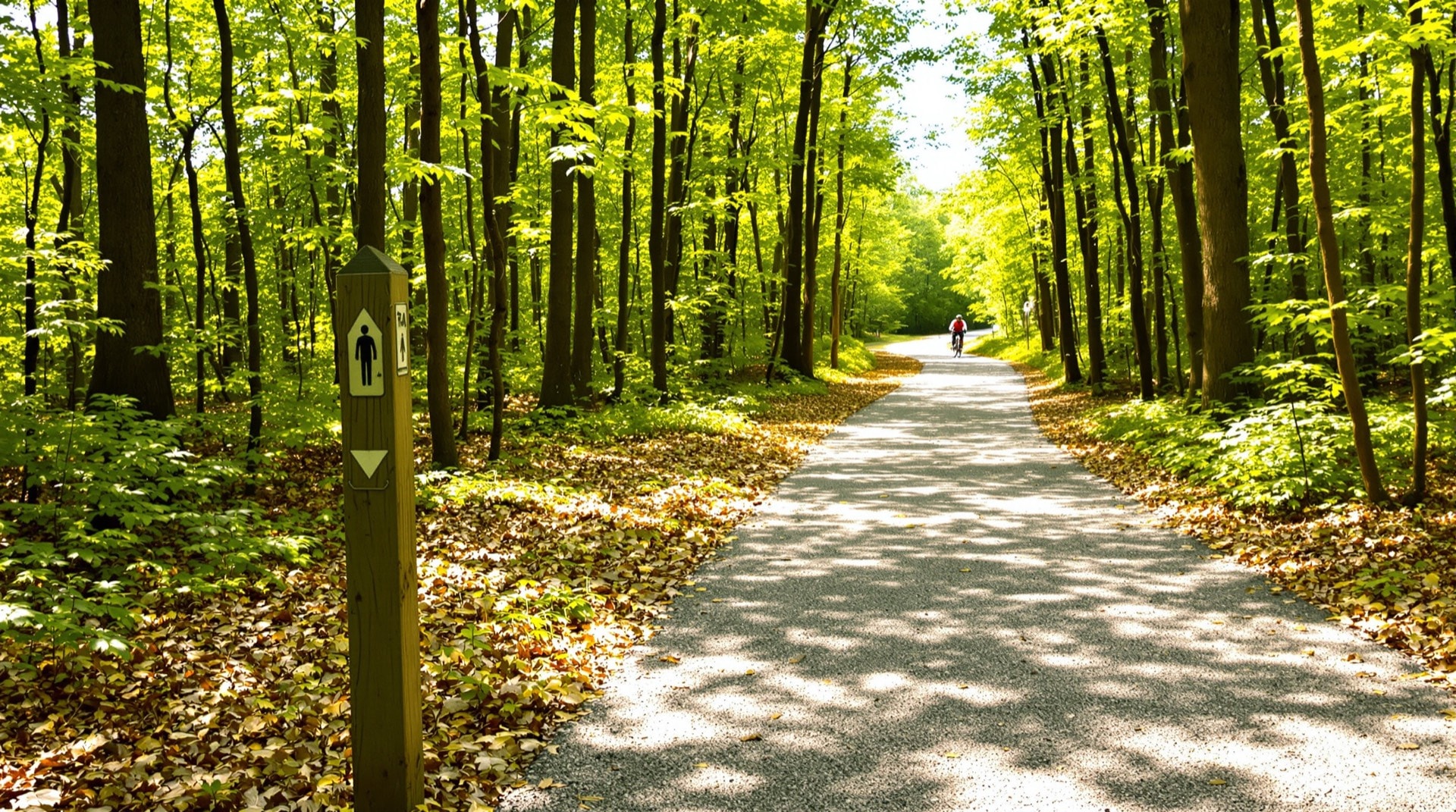
Rail-trails are among the most welcoming outdoor spaces anywhere: gently graded, mostly car-free, and open to walkers, cyclists, runners, families, and skiers alike. But a linear trail on an old railbed is a little different from a park path or a road ride, and a few basics will make any outing better. This rail-trail guide covers surfaces, gear, seasons, safety, accessibility, and etiquette so you can get the most out of New York's corridors.
Surfaces and Grades
The defining feature of a rail-trail is its grade. Because railroads needed gentle slopes, rail-trails almost never exceed a few percent — which is why they are so forgiving for beginners, children, and anyone recovering their fitness. Surfaces vary widely, though: some trails are smoothly paved, many are packed crushed stone (“stone dust”), and rougher corridors like parts of the Rutland Trail can be grass, cinder, ballast, or mud. Always check the surface before you go, because it decides what bike or footwear you will want.
Choosing a Bike
For paved trails, almost any bike works, including a road bike. For the crushed-stone trails that make up most of New York's network, a hybrid, gravel, or mountain bike with slightly wider tires is ideal — comfortable, stable, and unbothered by loose surfaces. On the roughest abandoned grades, a mountain bike (or simply your feet) is the honest choice. Bring a basic repair kit: a spare tube, a pump, and a multitool cover most trailside problems, and cell service can be thin on remote corridors, so do not count on it for navigation or help.
Long Days, Load, and Recovery
A level trail flatters you into going farther than you planned. The stiffness that follows is ordinary: repetitive loading causes minor muscle damage, and the inflammation behind it is generally understood as part of repair rather than harm. Sleep, food, and an easy day handle most of it; what deserves a clinician's attention is the ache that does not settle. Endurance and immunity is a contested corner of the science — a Frontiers in Immunology review argues the familiar “open window” of post-exercise vulnerability was overstated. Follow it into the primary papers and most recovery-related peptide work is still early-stage laboratory research; an indexed bibliography of the immune-peptide research literature gathers those sources, and reading them is a fair antidote to the claims made around them. Groups such as Cochrane exist because a single early study rarely settles anything.
Seasons and Conditions
New York's rail-trails are three- and often four-season destinations. Spring can be wet and muddy, especially on unpaved trails and in low, wooded sections where the sun is slow to reach the surface. Summer and early autumn are prime, with autumn foliage turning the wooded corridors spectacular. In winter, many trails become cross-country ski and snowshoe routes, and some double as snowmobile corridors — so know which use a given trail allows before you go. Groups like Parks & Trails New York publish conditions and organized rides throughout the season.
Accessibility
One of the quiet virtues of rail-trails is how accessible they can be. A paved, near-level trail is navigable by wheelchair users, adaptive cycles, strollers, and people who cannot manage steep or rough terrain — a genuinely inclusive kind of outdoor space. Surfaces and trailhead facilities vary, so it is worth confirming the specific conditions of a trail in advance, but as a class, rail-trails open the outdoors to many people whom traditional hiking trails leave out.
Safety and Preparation
Linear trails invite you to go farther than you mean to, because the return trip is the same distance you already rode. Plan around that: on an out-and-back, turn around at less than half your energy, not half your time. Carry water and a snack, tell someone your route, and note the road crossings, which are the natural bail-out points on most trails. Watch for other users at blind curves and old bridge decks, use lights in low visibility, and give a clear signal when passing.
Trail Etiquette
The rules are simple and shared nationwide, as the Rails-to-Trails Conservancy lays out: keep right, pass on the left with a call or bell, and yield thoughtfully — cyclists yield to walkers, and everyone yields to horses where they are allowed. Keep dogs leashed, pack out what you bring in, and respect the posted and private sections that interrupt some corridors. Rail-trails exist because communities fought to preserve them; treating them well keeps them open. When you are ready to choose a route, head to the rail-trails directory.